
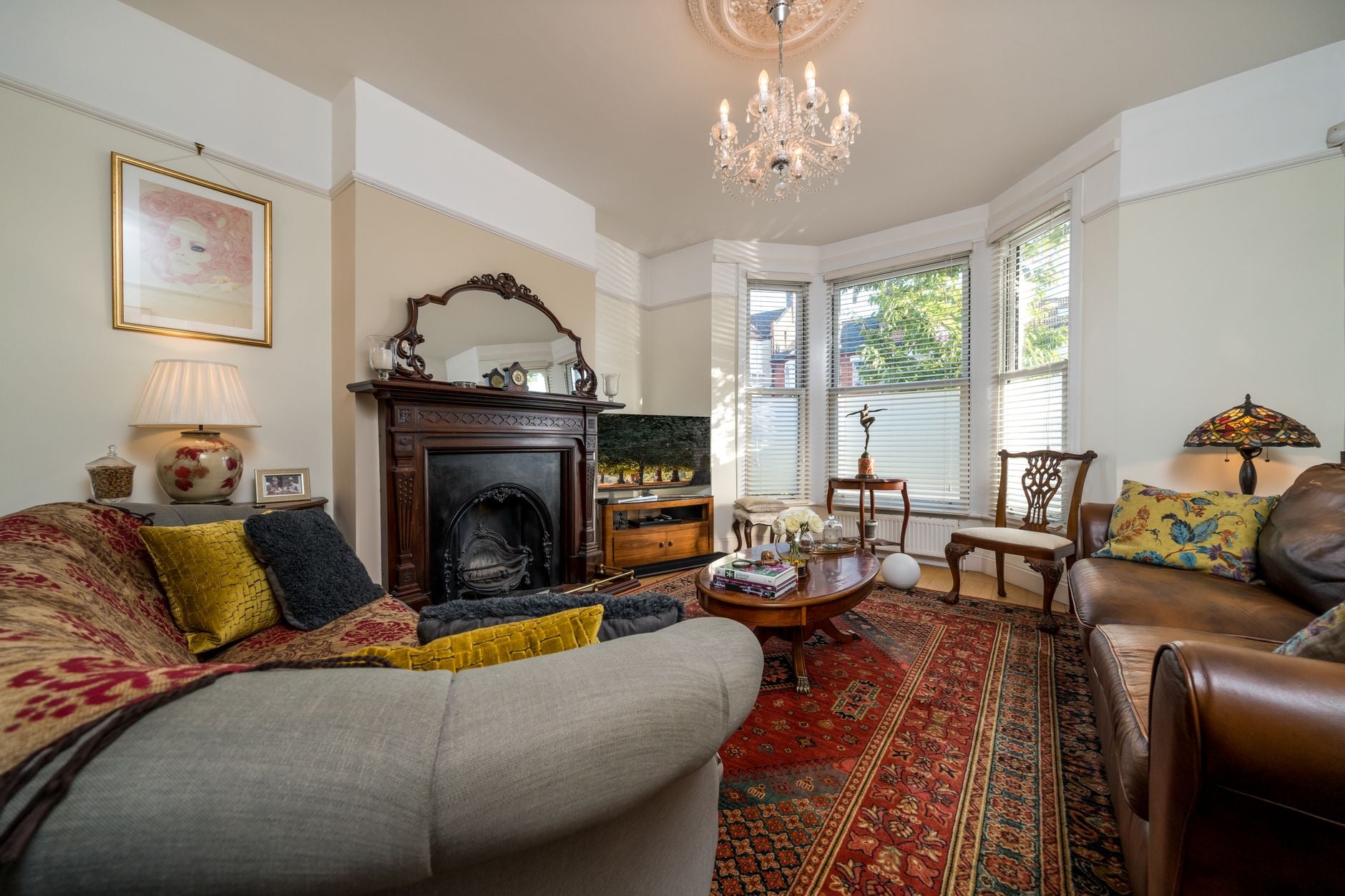

The fireplace didn't change. Everything around it did.
That's the pattern behind a lot of calls we get from homeowners who finished a remodel, or who rebuilt in Pacific Palisades after the January 2025 fire. The new house is beautiful. The first fire of the season fills the living room with smoke. "It never did this before" is the usual sentence, and it's usually true.
A chimney only works when the house supplies air to it and the wind outside leaves its top alone. A remodel can change both. Below are the four changes we see most, a simple test you can run at home, and the fixes, roughly from least work to most.
Four remodel changes that break draft
The house got tighter
New windows, new doors, spray foam, sealed attics and fresh weatherstripping all cut the air leaks an old house relied on. That's good for energy bills and bad for an open fireplace, which pulls a lot of room air up the flue. When the house can't replace that air through gaps, it pulls it from wherever it can. The easiest path is often straight back down the chimney, carrying smoke with it.
You'll notice this most on the first lighting, when the flue is still cold and the draft is weakest.
The roofline rose above the chimney
Adding a second story, raising a ceiling, or rebuilding with a taller roof can leave the old chimney sitting lower than the roof around it. Picture a ring drawn ten feet out from the flue in every direction. Any piece of roof inside that ring has to sit at least two feet below the chimney top. If the remodel pushed new roof into that ring and above that line, wind rolling over the new ridge can press down on the flue and hold the smoke in.
Rebuilds on hillside lots make this worse, since the roof may now catch wind it never used to.
The fireplace opening got bigger
A remodel is a natural time to redo the fireplace face, and a wider or taller opening looks great. The flue, though, was sized for the old opening. A flue can only move so much air, and when the opening grows past what the flue can handle, smoke spills out the top of the opening, especially the corners.
A new kitchen hood went in
A big range hood in an open kitchen can pull more air out of the house than anything else running. With the house sealed tight, the hood wins against the fireplace every time. Bath fans, a clothes dryer and a whole-house fan stack on top of it. If smoke shows up when dinner is cooking, this is a strong suspect. The same pull can drag exhaust down a gas fireplace vent, which is a carbon monoxide concern, not only a smell.
Test it with fans on and off
You can narrow this down in an evening. You'll need a small fire or a lit incense stick, and someone to watch the opening.
- - Close all windows and exterior doors, and turn off the range hood, bath fans and dryer
- Open the damper fully and light a small, hot fire with dry kindling, or hold the incense at the top edge of the opening
- Watch which way the smoke goes. It should lean firmly into the firebox and up
- Now turn on the range hood at high speed, then the bath fans, then the dryer, one at a time
- Watch for the smoke to slow, hang at the opening, or roll into the room
- Crack a window near the fireplace about an inch and see if the smoke straightens out
If cracking a window fixes it, the house is short on air. If the fans make it worse, they are the trigger. If it smokes with everything off and windows open, look at the opening size or the chimney height instead. If it only smokes when it's windy, the roofline is the likely cause.
Don't run this test with a fire if you have a carbon monoxide alarm sounding or anyone feels unwell. Put the fire out and call.
Fixes, smallest to largest
Makeup air
A dedicated outside air supply gives the house a way to replace what the hood and fireplace pull out. For a kitchen hood, this is often a damper that opens when the hood runs. For the fireplace, it can be an outside air kit feeding the firebox. Sometimes the fix is as simple as a habit: crack a window when you light a fire and keep the hood off. Mechanical makeup air work is priced in writing after we see the layout.
Smoke guard
A smoke guard is a strip of metal or glass fixed across the top of the opening. It makes the opening shorter, which brings it back in line with what the flue can carry. It's a small, affordable change and it often solves the smoke-at-the-corners problem from an enlarged face. Glass doors help in a similar way and also stop room air from being pulled up the flue when there's no fire.
Raising the chimney
When the roofline is the cause, the chimney needs to get taller. A masonry chimney can be extended with new brick or block, and a factory-built one usually takes a listed extension section. On a rebuild, this is easiest to handle while the roof is still open. Height, structure and material all vary, so this is quoted after an inspection. Our chimney rebuilds page explains how that work is done.
A sealed gas insert
For many remodeled homes, the cleanest answer is to stop asking an open fireplace to fight a tight house at all. A sealed gas insert sits in the existing firebox, draws its combustion air from outside and sends its exhaust back out through a liner, so the kitchen hood and the tight windows have nothing to pull against. You lose the wood fire, but you get heat on a switch and no smoke in the room. See fireplace inserts for the options.
What decides the price of the fix
Each fix costs very differently, and the cause decides which one you need. A sealed gas insert, installed, comes to $2,900 to $5,800 depending on the unit, the size of the firebox and the liner run. A smoke guard or glass doors sit well below that. Chimney extensions, makeup air ducts and any masonry work are priced in writing once we've looked at the house.
What pushes a job up or down:
- - Whether the test points clearly to one cause or several at once
- Roof height, pitch and access for any chimney work
- Gas line distance and permit needs for an insert
- Whether a rebuild is still open, which makes changes cheaper
If you want a written number, describe the remodel and what you saw during the fan test in the quote form.
Remodels in Brentwood, Santa Monica and across the Westside run into the same issue, and so do rebuilds in Pacific Palisades. Press the call button on this page and tell us what changed in the house. We'll come out and run the test with you.
Read Enough? Let Us Watch the Draft
Articles only go so far. A smoke test at your own hearth shows where the air is going wrong.Everett Chimney Works books these visits across the Westside / Malibu Coast.


