
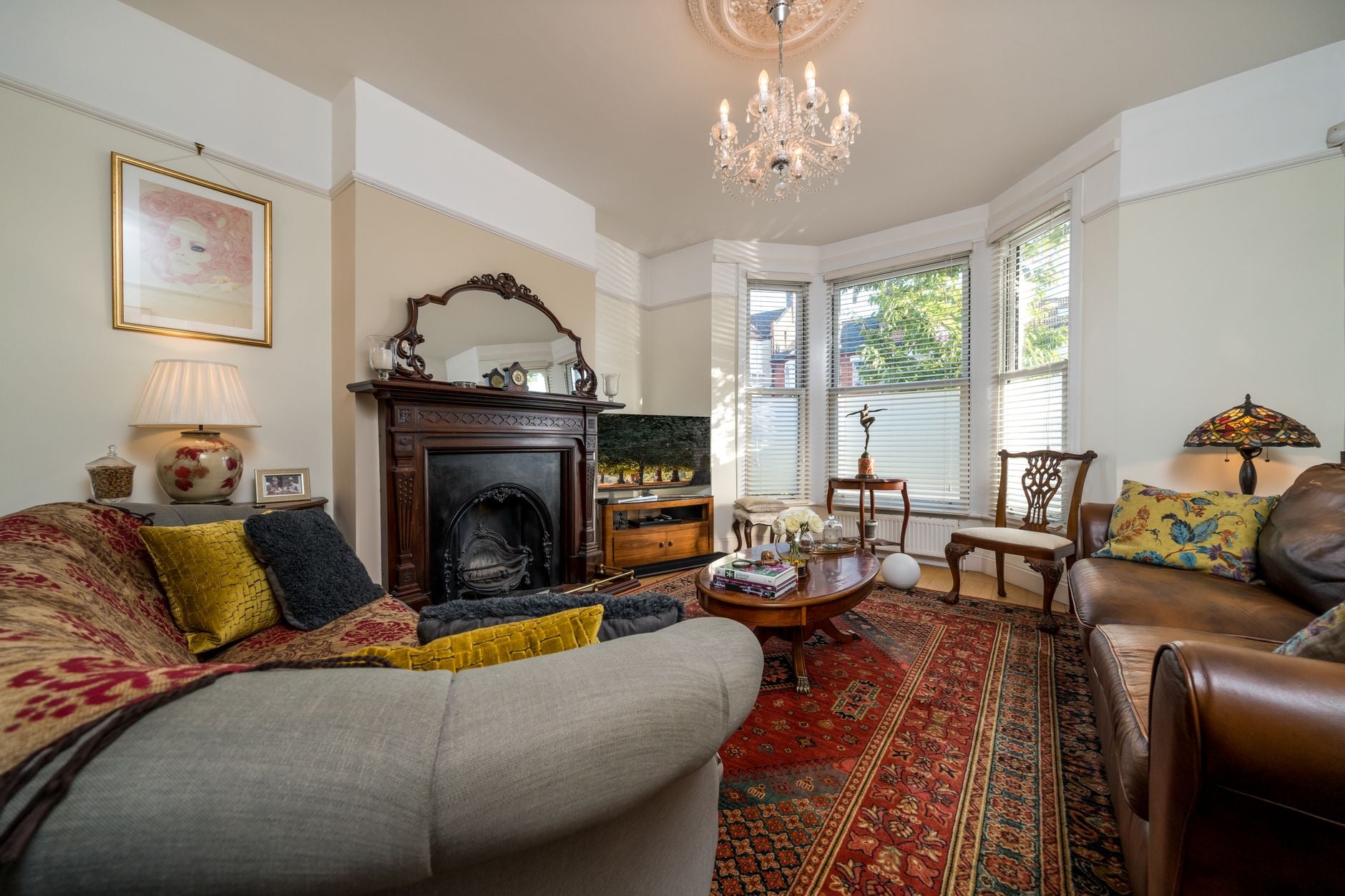

Nobody has lit a fire in weeks, and the living room still "smells like an old campfire." It comes and goes. On a dry, breezy day you barely notice it. Then the marine layer rolls in, or the air turns warm and sticky, and the smell is there the moment you open the front door.
That pattern is the most useful clue you have. A chimney is a tall masonry tube open to the sky. When the weather changes, the air inside it changes too, and whatever is clinging to the flue walls gets carried into the house. The question is what is clinging there, and why the air is moving down instead of up.
Why weather turns the smell on
On a cool night, air in the flue is often warmer than the outside air and drifts upward, taking any odor with it. On a warm afternoon, or when fog sits on the coast, that reverses. The house is cooler than the air above the roof, so outside air sinks down the chimney and into the room. Humidity adds a second effect: creosote and soot absorb moisture, and damp deposits release far more odor than dry ones. Homes along the coast in Pacific Palisades, Malibu and Santa Monica notice this more than homes inland for exactly that reason.
So the smell is rarely new. It has usually been in the flue all along, and the weather simply decides which way it travels.
The four usual sources
Creosote and soot
Every wood fire leaves a coating of creosote on the flue. Light, flaky deposits smell faint. Thick, glazed deposits smell strong, and they are also the fuel behind chimney fires. If the fireplace was used a lot last winter and not swept afterward, this is the first suspect.Damp masonry from a leak at the roof
Brick and mortar soak up water. Where the chimney passes through the roof, a metal seal keeps rain from running down the outside of the stack and into the house framing. When that seal lifts, cracks, or loses its caulk, water gets into the brick and the attic around it. Wet masonry smells musty on its own, and wet creosote smells worse than dry. Look for stains on the ceiling beside the chimney, peeling paint on the breast, or white powder on the brick inside the firebox.Animals
Birds, rats, and raccoons treat an uncapped chimney as shelter. A nest adds its own smell, and an animal that dies in the smoke shelf produces an odor no amount of air freshener covers. Scratching or chirping in spring is the giveaway.Downdraft
Even a clean flue carries some odor when air pours down it all day. Tight houses with strong exhaust fans pull harder, and a chimney shaded by a taller roof or tree catches wind that pushes downward. Downdraft does not create the smell by itself, but it is the delivery system for the other three.What you can try before booking
- - Close the damper all the way and see whether the smell fades within a day. If it drops sharply, the source is in the flue.
- Cover the fireplace opening with a sheet of cardboard and tape for a night. Same test, tighter seal.
- Turn off the kitchen hood and bath fans for an afternoon and see if the odor eases.
- Scoop out old ash. A firebox full of ash on a humid day smells on its own.
Baking soda, charcoal bags, and scented sprays mask the smell for a few hours. None of them reach the flue.
How we track it down
We start with a look at the firebox, the damper, and the smoke shelf above it, then put a camera up the flue to see how thick the deposits are and whether there is water staining or debris. On the roof we check the crown, the cap, and the joint where the chimney meets the roofing. A Level 1 inspection is $57. If the flue needs a full camera pass, a Level 2 inspection runs $355.
The fixes
Cleaning
A full sweep removes the creosote and soot that carry the smell. Fireplace cleaning and sweeps start from $230. For many homes, this alone ends the problem. For glazed creosote, a heavier removal treatment may be needed, which we price after seeing how far it goes.Sealing the damper you have
Old cast iron throat dampers rarely close tight. A worn gasket or a warped plate leaves a gap, and air slips past it all summer. Sometimes the frame can be adjusted. Sometimes it cannot, and a replacement makes more sense. Either way, the cost is set in writing after we look.A top-sealing damper
This is a lid mounted at the top of the flue with a rubber gasket, opened and closed by a cable that runs down to the firebox. Because it closes at the top, it stops air, rain, and animals from entering at all, not just at the throat. It is one of the most effective answers to a fireplace that smells in summer. The price depends on the flue size and crown, and we quote it once we have measured.Flashing repair
If water is getting in at the roof line, cleaning alone will not hold. The smell returns with the next wet week. Resealing or replacing the metal at that joint stops the water at its source. See chimney flashing repair for how that work is done. It is priced after we see the roof and the extent of any damage.A cap
A chimney cap keeps rain and animals out of the flue from above. Caps cost $170 to $695 depending on size and material, and on many Westside chimneys a cap and a sweep together solve what seemed like a mystery smell.What sets the cost
- - How heavy the creosote is. Flaky soot sweeps out; glazed deposits take more work.
- Whether water has reached the framing or the ceiling, which adds repair beyond the chimney itself.
- The roof. Steep pitches and clay tile in Pacific Palisades and Brentwood take longer to work on safely.
- Which fix fits. A sweep alone costs less than a sweep plus a top-sealing damper plus flashing.
- Animal removal, if something is still living in the flue.
Want an estimate first? Send photos of the fireplace, any ceiling stains, and the top of the chimney if you can see it through the quote form, and we will tell you what we think is going on and the likely cost.
Signs this has gone past a smell
A musty odor paired with ceiling stains means water is moving, and water inside a wall does damage quietly. A sharp, sour smell that comes on suddenly can mean an animal. A smell that turns strong after the house closes up for winter, with headaches or drowsiness, points to an air problem worth taking seriously: put a carbon monoxide alarm near the fireplace and get the chimney checked before the next fire.
If any of that sounds like your house, use the phone link at the top of the page. Mention when the smell is worst and what the weather was doing, and we will know where to start.
Read Enough? Let Us Watch the Draft
Articles only go so far. A smoke test at your own hearth shows where the air is going wrong.Everett Chimney Works books these visits across the Westside / Malibu Coast.


